Beijing Forbidden City Travel Guide
The Forbidden City in Beijing, one of the largest and most well-preserved ancient buildings with wooden structures in the world, is known as the world's five major palaces along with Versailles in France, Buckingham Palace in the United Kingdom, the White House in the United States, and the Kremlin in Russia. Formerly known as the Forbidden City, it was built in the fourth year of Yongle (1406 AD) of Zhu Di, the founder of the Ming Dynasty, and was completed after 14 years.
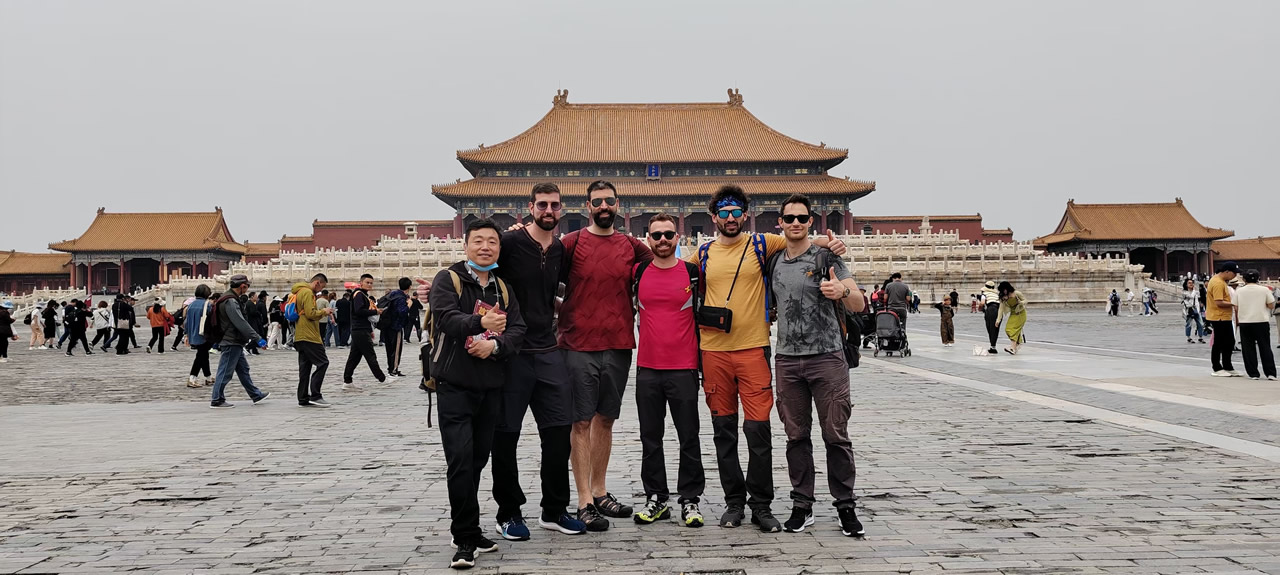
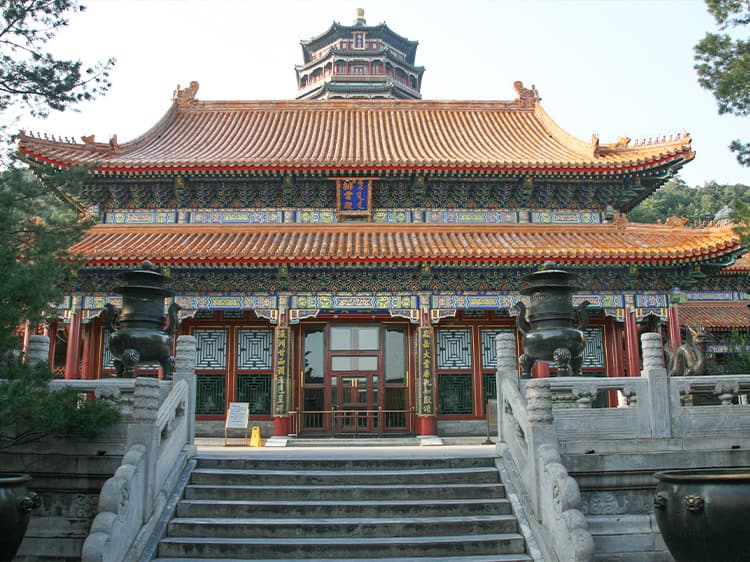
The whole building is refined, solemn and gorgeous, all of which are wooden structures, yellow glazed tile roofs, blue and white stone bases, decorated with resplendent colorful paintings. The palace city is surrounded by a 12-meter-high, 3,400-meter-long palace wall in the form of a rectangular castle surrounded by a 52-meter-wide moat, forming a heavily fortified castle. The palace is centered on the three halls of Taihe, Zhonghe and Baohe, arranged along a north-south central axis, and spread out to both sides, with straight north and south and symmetrical left and right. This central axis not only runs through the Forbidden City, but also reaches the Yongding Gate in the south, and runs through the entire city to the Drum Tower and Bell Tower in the north.
Distribution of attractions:
The Forbidden City is located in the core of Beijing, between Tiananmen Square and Jingshan Park, covering an area of 720,000 square meters, with a construction area of 150,000 square meters and 9,999 houses. The Palace Museum has a large collection of precious cultural relics, according to statistics, a total of 1052653 pieces, collectively known as 1 million cultural relics, accounting for 1/6 of the total number of cultural relics in the country. Some palaces of the Forbidden City have set up comprehensive historical art museums, painting museums, classified ceramic museums, bronze museums, Ming and Qing arts and crafts museums, inscription halls, toy halls, study four treasure halls, playthings halls, treasure halls, clock halls and Qing Dynasty court regulations and cultural relics exhibitions, etc., which have a large collection of ancient art treasures and are the richest museum in China.
Scenic Area Qualifications:
National 5A-level scenic spot, world cultural heritage, and national key cultural relics protection unit
Scenic spot features:
Historical site tours, cultural tours, parent-child tours, museums, royal gardens, ancient buildings
Recommended Popular


Quick Navigation
Related Recommendations