The flavor of homecoming

As the Chinese New Year draws near, 71-year-old Peng Zuhua boards a long-distance bus bound for home. His destination is Baojing county, nestled deep in the Xiangxi Tujia and Miao autonomous prefecture of Hunan province — a mountainous region where the scent of wood smoke and cured meat announces the coming of Spring Festival long before the calendar does.
Once home, his days quickly fill. After the Winter Solstice, Tujia villages begin one of the most important rituals of the year: shanianzhu, the slaughter of the New Year pig. The event is both practical and ceremonial, a cornerstone of Spring Festival preparations that blends necessity with celebration.
Families invite relatives and neighbors, set long wooden tables, and move from house to house in a continuous round of feasting. The sound of laughter and clinking bowls carries through narrow mountain paths. Peng, like many elders, becomes a familiar figure at these gatherings, welcomed for both his presence and his stories, sharing meals and memories in equal measure.
For the Tujia people, the ritual is inseparable from the Chinese New Year itself. Fresh pork is cut and cooked immediately, forming the centerpiece of celebratory banquets that stretch late into the night. Other prized cuts — pig trotters and ribs — are carefully salted and preserved to make larou, the smoked cured pork that defines the region’s Spring Festival flavor.
Across China, Chinese New Year’s Eve dinner remains the most ceremonial meal of the year — a moment when families reunite, no matter how far they have traveled. Customs vary widely between the north and the south, but each dish on the table carries symbolic meaning, expressing wishes for prosperity, longevity, and peace.
In recent years, as smaller households have become the norm, Chinese New Year’s Eve tables have grown more varied than ever. Yet, beneath changing menus lies a constant: everyone carries one unforgettable “taste of Spring Festival”, a flavor bound to memory, belonging and family warmth.
For Peng, that taste is cured pig trotters — an unchanging anchor of his family’s reunion meal. “The rich, salty aroma of larou,” he says, “that’s the taste of home”.
The process behind that taste is precise and time-consuming. After slaughtering, the meat is cured for about a week with salt and locally grown red Sichuan peppercorns. “It has to be our local peppercorns,” Peng explains. “Otherwise, the flavor isn’t right.”
The cured meat is then hung roughly 1.5 meters above the household fire pit and smoked slowly with low heat. Too high, the smoke won’t penetrate; too low, the meat cooks through, losing its texture and character. The smoking lasts anywhere from 20 days to a month, requiring constant attention. The fire must not go out, and the wood must be dry. “Oily branches make the meat bitter,” Peng says.
Well-preserved pork, he adds, reveals itself when sliced: fat translucent like amber, lean meat a deep reddish brown. “That’s when you know it’s done right.”

A pot of soup
If western Hunan’s Chinese New Year flavor lies in smoke and salt, then in southern Fujian it is steeped in steam rising from a pot of soup. For Hong Zhixiong, a 55-year-old chef who grew up in Xiamen, Fujian province, Spring Festival is inseparable from a bubbling broth set over a charcoal stove.
As a child, his favorite part of Spring Festival was watching family members return home from afar and gather around the fire, sharing one pot of soup together.
“Fujian ingredients naturally bring together mountain and sea,” Hong recalls. “In our Chinese New Year soup, besides chicken and duck, we add local seafood. That freshness stays with you for life.”
It is eaten in a particular order. Once half the soup is gone, seafood and dried bean curd sticks are added. Leafy greens must wait until the very end. Added too early, they dull the soup’s clarity and disrupt its balance.
Today, for Hong, who is the executive chef of Fujian Restaurant in Beijing, freshness remains the guiding principle of his cooking. His soups are built on restraint rather than excess, where the natural sweetness of seafood mingles with the deep, savory richness of meat, amino acids from each ingredient weaving together to create a broth layered with flavor and memory.
Mushrooms add warmth and depth, while seasoning is kept to a minimum — sometimes even salt is omitted. “The seafood already has everything the soup needs,” Hong says. “That’s how my parents did it too.”
In his childhood home, snow clams were often added near the end. Their coin-shaped shells symbolized wealth and good fortune, making them a must-have for the Chinese New Year’s Eve table.
Beyond soup, Xiamen households also rely on five-spice meat rolls to complete the festive spread. Wrapped tightly in tofu skin, they symbolize unity and togetherness. Each family has its own version: pork mixed with spices and water chestnuts for crunch, or shrimp added for extra sweetness. When guests arrive, the rolls are fried again until golden and crisp. “And on the first day of the Chinese New Year, we eat mianxian,” Hong adds, “long noodles in hot broth — meant to bring peace and longevity.”

Gatherings beyond tradition
As traditions endure, the settings in which they are celebrated continue to evolve. While home kitchens still glow across towns and villages, an increasing number of families now mark Chinese New Year’s Eve at restaurant tables.
Busy schedules, smaller households, and a thriving dining industry have turned restaurant reunion dinners into a modern alternative — without diminishing the meaning of reunion itself.
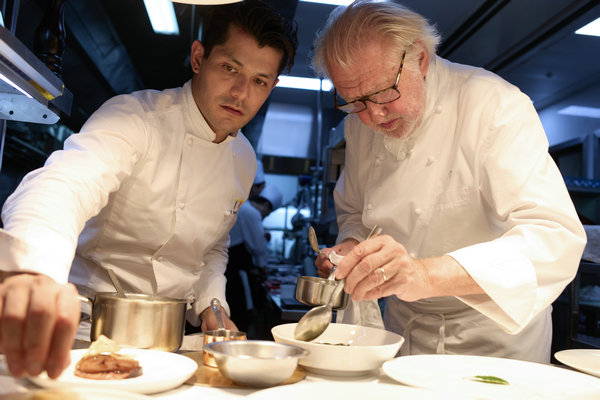
For Homan Tsui, executive chef of Imperial Court at MGM Macau in Macao, Spring Festival has meant work for more than two decades. Each Chinese New Year’s Eve, while families gather at home, Tsui remains in the kitchen, preparing dishes designed to carry the warmth of reunion to his guests.
Over time, he has noticed a clear shift. Younger diners increasingly choose restaurants, often celebrating in pairs or small family groups rather than large extended clans. This year, his Chinese New Year’s Eve menu focuses on two- and four-person set meals tailored to that reality.
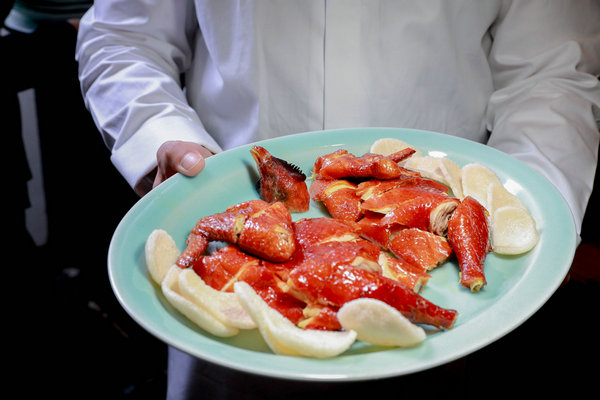
“When I was growing up, the table always had chicken and fish,” says Tsui, who was born and raised in Hong Kong. “They symbolized good fortune.” That attention to symbolism shapes his menu today, down to a bright red hawthorn roll meant to convey wishes for prosperity.
Working in Macao, Tsui is keenly aware of holiday rhythms. Local diners dominate from Chinese New Year’s Eve through the second day of the first month in the Chinese calendar, while visitors arrive in greater numbers from the third day onward. To meet local preferences, he introduced a takeaway version of poon choi, a layered communal dish beloved in southern China.
“A single pot is enough for a small group,” Tsui explains. “And during the Spring Festival holiday, many shops are closed. This can be taken home and eaten over two days.”
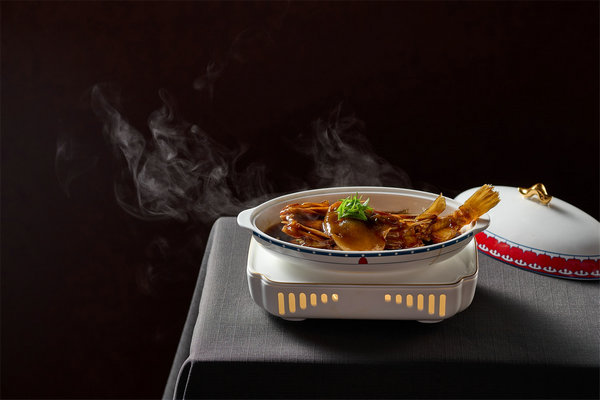
The dish includes sea cucumber, dried scallops, abalone, and shrimp — luxurious ingredients meant to mark the occasion. To ensure quality, Tsui introduced a reservation-based pickup system, allowing the kitchen to reheat the dish precisely before collection, preserving both texture and temperature.
“During the Chinese New Year period, we also prepare banquets centered on high-end ingredients such as abalone and bird’s nest, specifically for visitors traveling to Macao, so they can experience a strong sense of Chinese New Year celebration even away from home,” Tsui adds.
Tsui’s dedication reflects a broader trend in the catering industry. In the past, many restaurants closed during Spring Festival. In recent years, however, as demand for dining out on Chinese New Year’s Eve has grown, restaurants across China have embraced the idea of “staying open for the Chinese New Year”, launching reservation-based festive menus well in advance to help families celebrate their reunions.
Recommended Popular




Quick Navigation
Related Recommendations