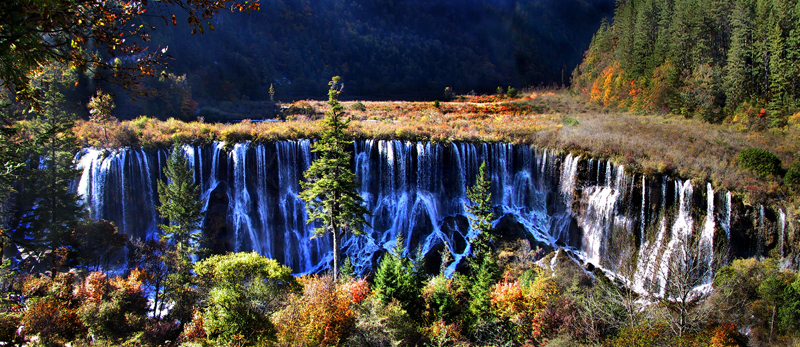
Jinhua Shuanglong Scenic Tourism Area
Jinhua Shuanglong Scenic Tourism Area is located at the foot of Jinhua Mountain in the northern suburbs of Jinhua City, Zhejiang Province, covering a total area of 7.95 square kilometers. It is a national AAAAA-level tourist attraction, a national scenic spot, a national forest park, and a national intangible cultural heritage site. It is a "sacred site of the three teachings, a land of immortal fragrance, and a fertile land of famous people," integrating Confucian, Buddhist, and Taoist cultures.
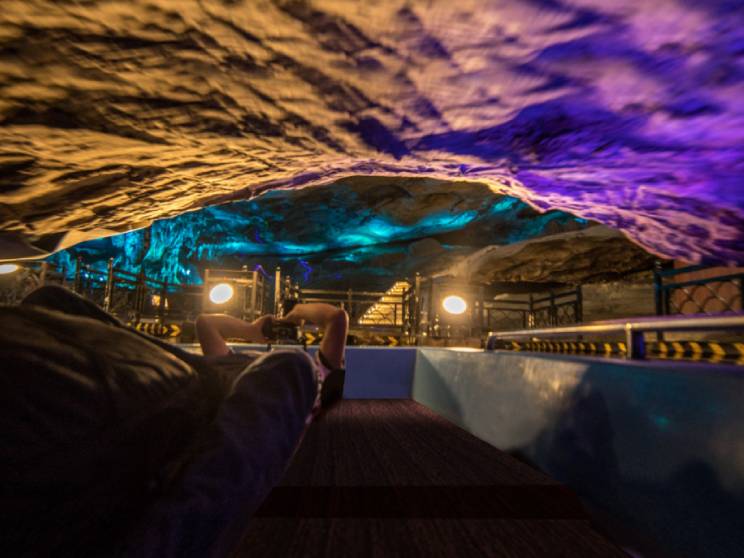
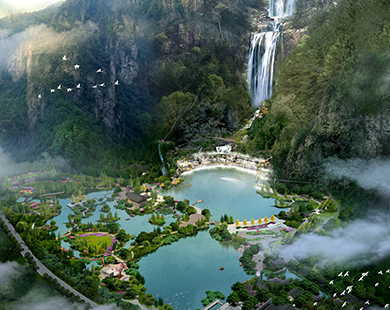
The tourist area boasts rich karst landforms and large-scale karst cave clusters. The caves within the area are extraordinary, with well-developed karst landforms. Within a 25-kilometer-long belt limestone layer, more than 50 caves, multiple underground rivers, and one underground lake are distributed, earning it the nickname "Five Lakes and Ten Scenic Spots" since ancient times. Shuanglong Boat, Binghu Waterfall Viewing, and Chaozhen Stone Appreciation are renowned as the "Three Wonders of the World." Xianpu Cave is thrilling and thrilling, featuring the "first naked-eye light and shadow show of the country's karst cave waterfall" and the "first interactive karst cave racing exploration experience area."
The tourist area boasts a profound and profound cultural heritage, bearing the millennia-old Shangshan culture, five thousand years of Taoist culture, two thousand years of Confucian and Buddhist culture, and a century of revolutionary culture. The "Wannian Shangshan Site," the origin of world rice cultivation civilization, is located on the northern slope of Jinhua Mountain; The thousand-year-old Zhizhe Temple was built by imperial decree of Emperor Wu of Liang, and the stele inscribed by Lu You, titled "Record of the Renovation of Zhizhe Guangfu Chan Temple," was unearthed and recognized as a national first-class cultural relic. It is the birthplace of the Song and Yuan Neo-Confucian "Jinhua School," where Zhu Xi and Lü Zuqian lectured. Lutian Academy is a provincially protected key cultural relic; The Juyancha making technique has been listed on UNESCO's Intangible Cultural Heritage list; Historically, 16 emperors, Li Bai, Wang Anshi, Su Dongpo, Li Qingzhao, and other literati have visited and traveled, leaving behind over 2,000 cultural relics including poetry, inscriptions, and inscriptions. Xu Xiake's "Diary of a Traveler in Zhejiang" contains nearly 10,000 characters, with over 4,400 characters written on Jinhua Mountain; Mr. Ye Shengtao's "Record of Shuanglong Cave in Jinhua" was included in the national primary school textbook; Senior Party and state leaders such as Mao Zedong, Zhou Enlai, and Zhu De have successively visited the tourist area, leaving behind precious red culture.
In recent years, the tourism area has actively attracted over a hundred tourism formats, including branded hotels, specialty homestays, popular restaurants, themed clubs, cafes, water sports, and alpine camping. The ever-evolving business models have made Jinhua Mountain a "place to enjoy" for young people, and special study tour routes like "Touring Shuanglong with Textbooks" and "Lutian Academy Coming-of-Age Ceremony" have also become students' "outdoor classrooms." The tourism area is committed to building China's famous cultural mountains and an international leisure tourism destination, creating new "cave mountains, lakes, and valleys" across the entire area, gradually forming a new tourism pattern of "one valley, two lakes, six caves, ten scenic spots," comprehensively promoting Shuanglong Scenic Area from the "karst cave era" to the "whole mountain era."
"The fairy Jinhua Mountain, where wonders naturally arise" is gradually unfolding a beautiful tapestry of cultural and tourism integration.
Recommended Popular


Quick Navigation
Related Recommendations